
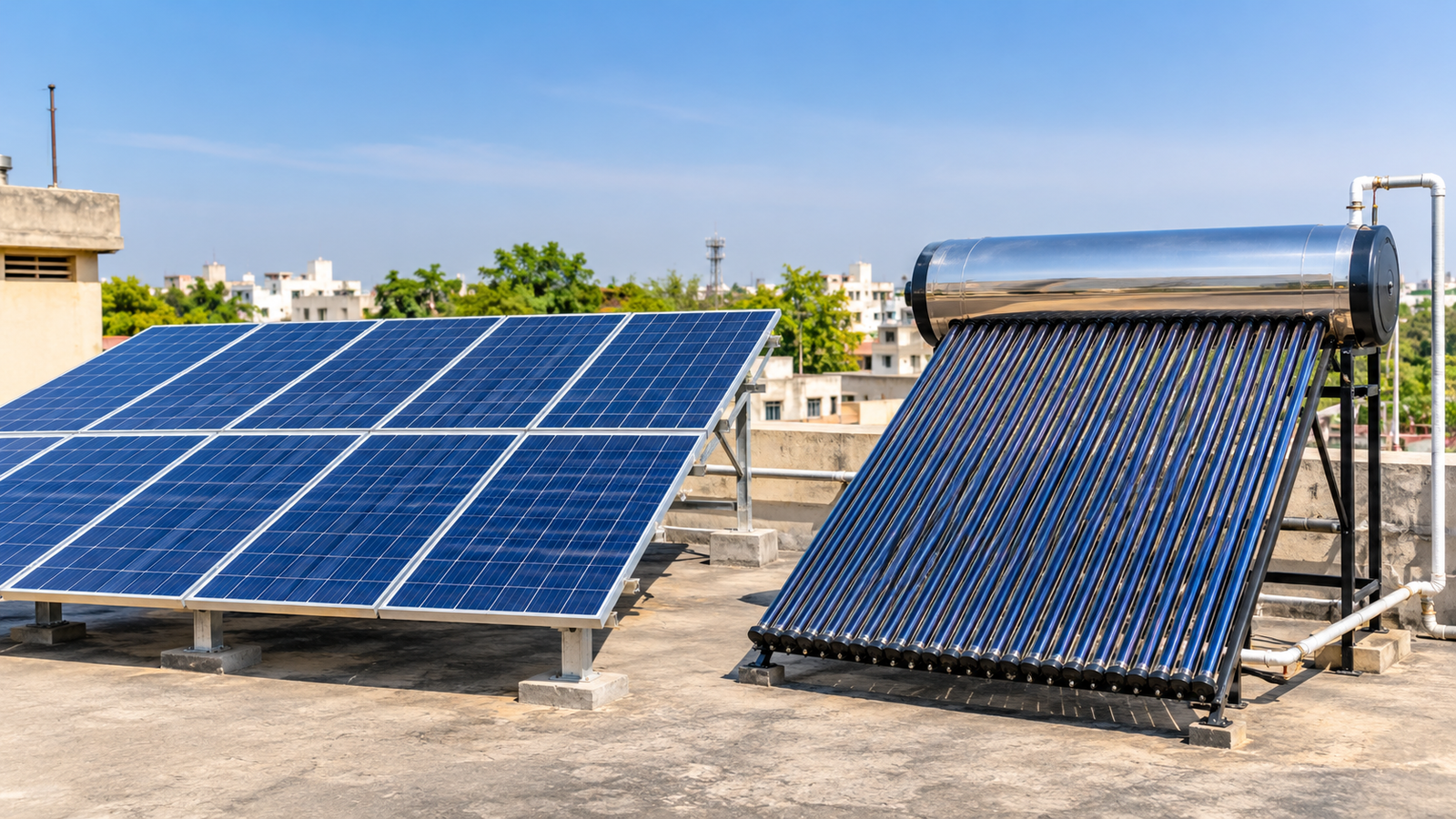
Solar PV (photovoltaic) systems convert sunlight directly into electricity using solar cells. Solar thermal systems capture the sun’s energy as heat, which can be used to heat water, air or another working fluid. In simple terms: PV is primarily for electricity; solar thermal is for useful heat. The right option depends on what your site needs—electrical power, hot water, process heat, or a combination.
The basic difference: electricity or heat
The easiest way to understand the difference is to look at the output. A solar PV module produces electrical energy. A solar thermal collector produces thermal energy, usually by warming water or another fluid. Both technologies use sunlight, but they do not perform the same job and are not direct substitutes in every project.
A PV system is usually connected to an inverter and the building’s electrical distribution system. The electricity can run lights, computers, pumps, motors, cooling equipment and other electrical loads. Depending on the system design, it may also interact with the grid or charge a battery.
A solar thermal system collects solar radiation and transfers the resulting heat to water, air or a heat-transfer fluid. A familiar example is a solar water heater. Larger thermal systems can support hot-water demand, space heating or selected industrial processes where the required temperature and operating pattern are suitable.
What is solar PV and how does it work?
Solar PV stands for solar photovoltaic. A PV module contains many solar cells, commonly made from semiconductor materials. When sunlight reaches the cells, it creates an electrical effect that produces direct-current (DC) electricity. Modules are connected into strings and arrays to achieve the voltage and power required by the system.
For most buildings, an inverter converts the DC output into alternating-current (AC) electricity used by ordinary electrical equipment. Protection devices, isolators, cables, mounting structures, monitoring and (where relevant) batteries and grid-interface equipment complete the system. The design must match the building’s electrical supply and applicable connection requirements.
PV output changes with sunlight, module temperature, shading, orientation, soiling and equipment condition. It is therefore important to compare a proposed system’s expected generation with the site’s actual consumption pattern, not simply with the rated capacity printed on a panel.
What is solar thermal and how does it work?
Solar thermal technology captures sunlight as heat. In a typical solar water-heating arrangement, a collector absorbs solar radiation and transfers heat to water or a heat-transfer fluid. The heated fluid may circulate directly or through a heat exchanger, while an insulated storage tank holds hot water for later use.
Common collector designs include flat-plate collectors and evacuated-tube collectors. Their construction, operating temperature range, climate suitability, maintenance needs and costs differ. Some systems use pumps and controllers; others use natural circulation. A correctly designed system may include a conventional water heater or boiler as backup for cloudy periods and times of unusually high demand.
Solar thermal equipment is often most useful where a site has a steady need for hot water or low-to-medium temperature heat. Examples can include hotels, hostels, hospitals, laundries, food preparation facilities and certain industrial processes. The exact application must be checked against the temperature, volume and timing of heat required.
Solar PV vs solar thermal: side-by-side comparison
The following comparison is a starting point. Actual equipment and performance depend on the product, site conditions and system design.
| Factor | Solar PV | Solar thermal |
|---|---|---|
| Main output | Electricity | Heat |
| Core equipment | PV modules, inverter, electrical protection | Thermal collectors, pipes, heat exchanger or tank |
| Typical uses | Lighting, motors, cooling, pumps and other electrical loads | Hot water, space heating and suitable process heat |
| Storage approach | Electrical batteries, where required | Insulated hot-water or thermal storage |
| Performance measure | Electrical energy generated, usually kWh | Useful heat delivered, often measured in thermal energy units |
| Important site checks | Electrical demand, roof, shading, grid connection | Hot-water volume, temperature, timing, water quality |
Where can each technology be used?
PV is relevant wherever a site consumes electricity during the hours when solar generation is available, or can use a suitable grid or storage arrangement to manage the difference between generation and demand. Commercial rooftops, factories, schools, hospitals, warehouses, offices and shopping centres may all be candidates, subject to structural, electrical, shading and regulatory checks.
Solar thermal is worth assessing when the site uses substantial hot water or heat. A hotel may need hot water for guest rooms and laundry. A hospital may have regular hot-water demand for selected services. A food-processing unit may use hot water in cleaning or preparation. In each case, the demand profile and required temperature should be measured before selecting collector area or storage capacity.
Some facilities need both electricity and heat. They may assess PV and solar thermal as separate systems serving separate loads. A combined approach is not automatically better: available roof area, hot-water demand, electrical demand, operating hours, maintenance capability and project economics all matter.
How to decide what your site needs
Start with the energy service, not the technology label. If the main issue is electricity consumption, PV is the relevant technology to assess. If the main issue is hot water or a heat requirement, solar thermal may be appropriate. If both are significant, evaluate both opportunities independently and compare their contribution to the site’s overall energy plan.
For an electricity assessment, collect recent electricity bills, sanctioned load or contract demand, interval consumption data where available, operating hours and details of major equipment. Review roof or ground area, structural condition, shading, cable routes, transformer capacity and grid-connection constraints.
For a thermal assessment, record daily hot-water volume, inlet and required outlet temperatures, draw-off times, seasonal variation, existing fuel or electricity use, storage arrangements and backup equipment. A thermal system that produces heat at the wrong time or temperature may not displace much of the existing energy use.
Ask vendors to state their assumptions clearly. For PV, request the system capacity, expected generation method, degradation assumptions, inverter details, losses, warranties and maintenance plan. For solar thermal, ask for collector type, useful heat output assumptions, storage volume, backup arrangement, temperature range, water quality requirements and maintenance needs. Compare proposals on the same basis and avoid treating an advertised peak rating as a guaranteed annual result.
Cost, maintenance and practical considerations
PV systems generally involve modules, inverters, mounting structures, cabling, protection and monitoring. Routine care may include visual inspection, cleaning where needed, checking electrical connections and reviewing system alerts. Inverter replacement or other component work may be required during the system’s life, depending on equipment and operating conditions.
Solar thermal systems involve collectors, pipes, insulation, storage tanks, valves, pumps or circulation controls, and sometimes heat exchangers. Maintenance can include checking for leaks, insulation damage, scaling, corrosion, pump operation, fluid condition and tank performance. Local water quality can be particularly relevant to system selection and upkeep.
There is no universal rule that one technology is always cheaper. A fair comparison considers the energy actually used by the site, the cost of the energy being displaced, installation conditions, backup needs, maintenance, equipment life, financing and replacement assumptions. A thermal project should be assessed in terms of useful heat delivered, while a PV project should be assessed in terms of electricity generated and used or exported under the applicable arrangement.
Can solar PV and solar thermal work together?
Yes. They can serve different energy needs at the same facility. PV can provide electricity for electrical loads, while solar thermal can preheat water or supply a suitable heat demand. This can be useful at sites with both substantial electricity use and a predictable hot-water requirement.
The systems should be planned as part of the site’s wider energy design. For example, the electrical plan should account for pumps and controls used by a thermal system, while the thermal plan should account for backup heating and actual hot-water demand. Separate monitoring helps the facility understand whether each system is delivering the intended benefit.
Common misconceptions to avoid
A solar PV panel does not normally heat water directly for a building’s hot-water system; it generates electricity. A solar thermal collector does not normally supply general-purpose electricity; it captures heat. Some products combine technologies or use electricity to support heating, but these are specific configurations and should be evaluated from their technical documentation.
Another common mistake is assuming that a sunny location alone guarantees a good project. Shading, dust, roof condition, water quality, operating hours, system orientation, maintenance access and load patterns all affect suitability. The right assessment starts with measured demand and a realistic design.
Frequently asked questions
Short answers to common questions. For a live project, confirm specifications and local requirements with a qualified professional.
What is the main difference between solar PV and solar thermal?
Solar PV converts sunlight into electricity. Solar thermal captures sunlight as heat, usually to warm water, air or another fluid.
Does solar PV produce heat or electricity?
A standard solar PV system is designed to produce electricity. The panels can become warm in sunlight, but that heat is not the useful output the system is designed to deliver.
What is solar thermal used for?
Solar thermal is commonly used for water heating and can support space heating or selected process-heat applications when the required temperature and demand pattern are suitable.
Which is better for a hotel: solar PV or solar thermal?
It depends on the hotel’s energy profile. PV may help offset electrical use such as lighting, cooling and pumps. Solar thermal may help meet a steady hot-water demand. Some hotels may assess both.
Can solar PV and solar thermal be installed together?
Yes. They can serve separate electrical and thermal loads at the same site, provided roof area, design, safety, maintenance and project economics support the combined arrangement.
Are solar thermal panels the same as solar PV panels?
No. PV modules contain solar cells that generate electricity. Thermal collectors are designed to absorb solar energy and transfer it as heat to water or another fluid.
Does solar thermal work on cloudy days?
Output generally falls when available solar radiation falls. A properly designed system may include insulated storage and a backup heater, but the amount of useful heat depends on weather and system design.
What information is needed before choosing between PV and solar thermal?
For PV, review electricity use, operating hours, roof and electrical conditions. For thermal, measure hot-water or heat demand, required temperature, draw-off timing, water quality and backup arrangements.
Planning solar for your business?
Start with your electricity bills, operating profile and site details. Viztaar Renewables can help you understand the next steps for a project-specific discussion.
Discuss your energy requirements ↗Editorial note: This guide is educational, not a project design, legal opinion or financial guarantee. Verify current technical specifications, state/DISCOM rules, prices, incentives and performance estimates for your site before making a decision.